


News & Insights
Stay Informed. Stay Connected.
How to control heat buildup when diluting sodium hydroxide solutions
Control heat buildup when diluting sodium hydroxide solutions by slowly adding the concentrated caustic to a measured water charge, with mixing and cooling established before addition begins. Never add water to concentrated caustic: the small amount of water at the contact point can heat rapidly, boil, and eject corrosive liquid. Set the feed rate around the system’s ability to disperse the incoming solution and remove heat, following the approved operating procedure and product safety data sheet.
Establish the water charge and temperature limits first
Calculate the batch using mass and confirmed feed concentration. For example, preparing a 20% by-weight solution from 100 kg of 50% by-weight caustic requires 150 kg of added water. This is a mass-balance example, not a dilution procedure; it does not establish a safe addition rate or cooling requirement. Volume-based calculations need density data at the relevant temperature, and final solution volume is not simply the sum of the starting volumes.
Charge the specified dilution water before introducing caustic. The water level must support effective agitation and cover the heat-transfer surfaces required by the equipment design. An undersized initial water charge concentrates heat in a smaller liquid inventory, even when the final batch proportions are correct.
Define the maximum operating temperature from the most restrictive applicable limit: vessel lining, seals, hoses, pump components, downstream requirements, or the approved process limit. Leave enough margin for instrument response and heat released after the feed stops. A single universal temperature limit cannot account for these differences.
Match addition rate to actual heat removal
Dilution releases heat as concentrated caustic mixes with water. A temperature estimate based only on averaging the two starting temperatures misses this heat release. For substantial batches or changes in concentration, use appropriate enthalpy–concentration data or a validated process calculation to estimate the temperature rise without cooling and determine the cooling duty.
Introduce the feed at the engineered addition point, where moving liquid rapidly disperses it. Avoid directing concentrated solution against a vessel wall, temperature probe, or cooling surface. Dense caustic can collect near the bottom when circulation is weak, producing a hot, concentrated layer while a remote temperature reading appears acceptable.
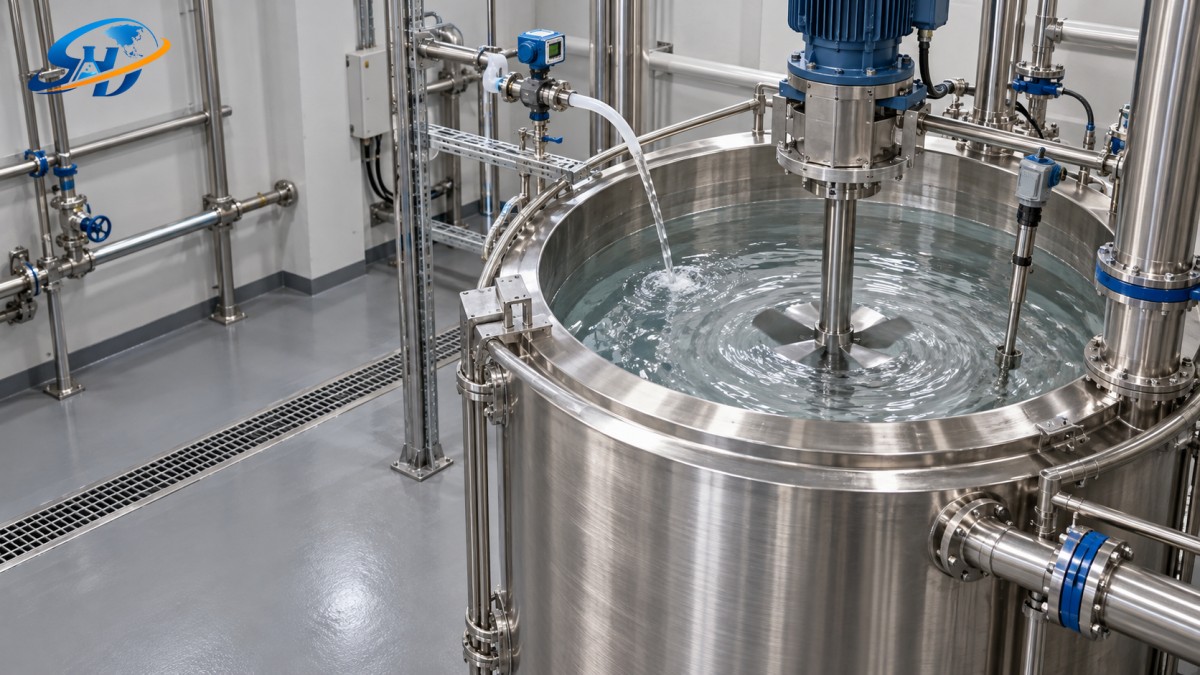
Start at the approved low feed rate and watch the temperature trend. A continuing rise means heat is accumulating; a rise that becomes progressively faster calls for prompt intervention under the operating procedure. Do not wait for the maximum temperature before reducing or stopping addition. Feed-line contents and incomplete mixing can allow heating to continue after the feed valve closes.
Cooling capacity also changes during a batch. Warmer cooling water, restricted jacket flow, fouled surfaces, or a larger batch can make a previously acceptable feed rate unsuitable. Increasing agitation alone does not remove the heat being generated, although it improves temperature uniformity and heat transfer.
Use temperature readings that represent the batch
Place temperature sensors where they measure circulating liquid rather than an isolated pocket or the immediate feed plume. Large vessels or arrangements prone to stratification may need measurements at more than one location. A persistent difference between readings warrants investigation of circulation and sensor condition before further addition.
Keep the temperature trend visible throughout dilution. Where the process design requires protective controls, high-temperature, loss-of-agitation, and cooling-failure signals should stop the caustic feed. An alarm by itself does not stop heat input.
- Temperature rises despite reduced feed: stop addition according to the procedure and maintain approved mixing and cooling, provided the equipment remains safe to operate.
- Unexpected vapor, spitting, or violent surface movement: treat this as a possible loss of control. Stop feed from a safe location and follow the site emergency procedure.
- A sudden low or flat reading: verify probe immersion, instrument operation, and circulation before increasing feed. A failed sensor can resemble successful cooling.
Do not attempt to control an overheating batch by pouring in extra water. This can create additional localized heating and splashing, particularly if concentrated layers remain.
Account for material limits and cold-feed problems
Confirm compatibility for the highest concentration and temperature each component will encounter, including the feed line before dilution. Aluminum, zinc, and galvanized components are unsuitable because caustic attacks them and can release flammable hydrogen. Suitability of steel, stainless steel, plastics, elastomers, and linings depends on service conditions; a material approved for the cooled final solution is not automatically suitable for the hot feed zone.
Lower starting temperatures provide more thermal margin, but concentrated caustic has concentration-dependent crystallization behavior. Excessive cooling can cause crystals or blocked lines. Use the supplier’s concentration–temperature information to set storage and feed conditions rather than chilling the concentrate indiscriminately.
After addition ends, continue approved mixing and cooling until temperatures are stable and sufficiently uniform. Confirm concentration using a representative sample and the specified analytical method; density readings require temperature correction. Transfer only after the batch meets the receiving equipment’s temperature and concentration limits.
Related Posts
- ▶ How to control heat buildup when diluting sodium hydroxide solutions
- ▶ How cellulose ethers affect water retention in tile adhesives
- ▶ When is anhydrous citric acid preferable for dry powder blends?
- ▶ Is rutile titanium dioxide better than anatase for exterior paint?
- ▶ How to prevent polyacrylamide lumps during solution preparation
- ▶ How to verify the active ingredient content of plant extracts
Send Us A Message