


News & Insights
Stay Informed. Stay Connected.
How to prevent polyacrylamide lumps during solution preparation
Gel-like lumps in a polyacrylamide preparation tank can delay batch release, block strainers, and make dosing inconsistent. The most effective prevention is to add dry powder gradually into moving water, keep fresh particles separated during wetting, and allow the specified hydration time. Trying to break established lumps with faster mixing is usually less reliable and may damage dissolved polymer chains.
This guidance applies to dry powder grades. Before adjusting the process, check the product’s preparation instructions: emulsion products require a different make-down procedure, and powder grades can differ in their recommended concentration, water conditions, and mixing requirements.
Recognize a wetting problem before changing the mixer
“Fish eyes” form when the outside of a powder cluster hydrates into a gel layer while dry material remains trapped inside. They often appear after powder is dumped into one spot, fed faster than the water can carry it away, or deposited on a wet tank wall.
Persistent, discrete gel particles suggest poor initial dispersion. A uniformly thick solution without visible particles may instead reflect the selected concentration or normal product viscosity. Appearance alone does not confirm complete hydration; compare the batch with the supplier’s acceptance criteria and the plant’s normal preparation checks.
Prepare the water and equipment first
Use clean make-up water that meets the grade’s requirements. Temperature, pH, dissolved salts, and suspended solids can affect hydration or solution performance. Cold water may extend dissolution time, but adding heat without checking the product limits is not a dependable shortcut. Likewise, do not add acid, alkali, or other chemicals simply to accelerate dissolution.
Inspect the tank for old gel deposits and confirm that the impeller produces circulation throughout the intended working volume. A moving surface does not necessarily mean the bottom and corners are being mixed. Remove residual lumps according to the site’s cleaning procedure before preparing another batch.
- Keep the powder hopper, scoop, and feed path dry; moisture can create agglomerates before the powder reaches the tank.
- Check that the actual water charge and powder mass match the intended preparation concentration.
- Confirm that the mixer can circulate the solution as viscosity rises, not just when the tank contains water.
Control the first contact between powder and water
- Charge water before powder. Establish circulation at the required water level. Adding water onto a pile of dry polymer encourages a hydrated shell around unwetted material.
- Feed a thin, steady stream. Introduce powder where moving water carries particles away promptly. Avoid dumping bags, feeding against the tank wall, or allowing powder to accumulate on the surface.
- Watch the feed zone. A floating raft, persistent powder patch, or growing gel deposit indicates that addition is outpacing dispersion. Pause the feed and restore effective wetting rather than continuing at the same rate.
- Adjust mixing for hydration. Use the equipment and product recommendations to balance dispersion with polymer protection. Avoid unnecessary high shear or prolonged aggressive mixing once the polymer is hydrated.
- Allow the specified maturation period. Start the hydration hold after powder addition is complete, unless the approved procedure specifies otherwise. Do not release the batch merely because the surface looks clear.
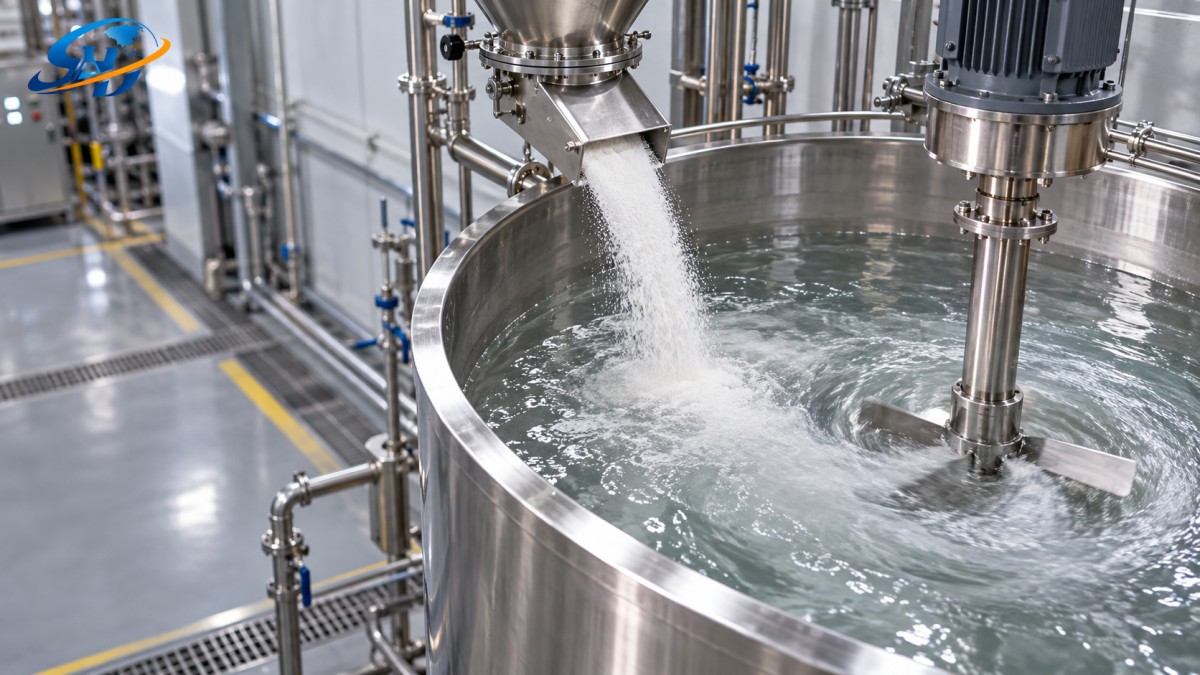
A deep, air-drawing vortex is not proof of good mixing. It can entrain air while leaving poorly circulated regions elsewhere. For recurring feed-point problems, a properly selected powder-wetting device or eductor may improve particle separation, but its water flow, powder capacity, and compatibility with the grade must be verified.
Use the lump pattern to choose the adjustment
Handle an affected batch without making it worse
Stop powder addition when substantial lumps develop. Continue only the mixing permitted by the product instructions and assess whether additional hydration time reduces the particles. Do not assume that extended mixing will dissolve a dry core, or use an unapproved high-shear pump as a rescue method.
Keep the batch out of dosing service until it meets the established preparation criteria. Straining may protect downstream equipment, but removing lumps also removes polymer and can change the usable concentration. Record the powder mass, water charge, feed duration, water temperature, and observed circulation so the next adjustment addresses the cause rather than simply increasing mixer speed.
Dry polymer and solution spills can create extremely slippery surfaces. Follow the safety data sheet for handling and cleanup, and isolate equipment before removing deposits or inspecting internal components.
Related Posts
- ▶ How to control heat buildup when diluting sodium hydroxide solutions
- ▶ How cellulose ethers affect water retention in tile adhesives
- ▶ When is anhydrous citric acid preferable for dry powder blends?
- ▶ Is rutile titanium dioxide better than anatase for exterior paint?
- ▶ How to prevent polyacrylamide lumps during solution preparation
- ▶ How to verify the active ingredient content of plant extracts
Send Us A Message